Broken Pieces

Showing posts with label Guest Post. Show all posts

Merry Farmer – What Makes A Hero? @MerryFarmer20

What Makes A Hero?
by Merry Farmer
Open the pages of any given romance novel these days and what will you find?  You’ll find a strong, devilishly handsome rake with a good heart.  He might have a past, he’ll certainly have an attitude, but above all he’ll have the best intentions at heart.  At least by the end of the story.
When I set out to write Our Little Secrets, I had a very different sort of hero in mind.  Michael West is not devilishly handsome.  He’s not particularly strong either.  He’s a shopkeeper with a past.  And he wears glasses.  But one thing he is, is smart.  Maybe even a little too smart for his own good.  He’s smart enough to pull himself out of the massive hole he digs for himself where his heroine, Charlie, is concerned.
I’ve always been attracted to the smart guys.  Muscle is okay if put to good use, but if you really want to melt my chocolate, give me a smart man any day.  Smart men might not be the first to jump into the fight, but they’re definitely going to come out of it in one piece.  Brawn might be able to turn a woman’s head and sweep her off her feet, but brain will build a home for her and figure out how to get her out of scrapes.  Best of all, a smart man knows enough to accept a woman for who she is, even if who she is makes him wince from time to time.
Michael West has his hands full when he agrees to marry Charlie almost as soon as she sets foot in Cold Springs, Montana.  Contrary to all of the fabulous stories of mail-order brides and quickie frontier marriages, it was highly unusual in Montana of the 1890s for a man to marry a woman he didn’t know.  Especially when he has secrets he wants to keep.  But what makes Michael a hero is his quick wit and his ability to recognize a good thing when it stumbles into his life.
Well, almost.  Some would argue that the things Michael does in Our Little Secrets are exactly the opposite of what a hero should do.  Does he stand up for his heroine when the chips are down?  Does he rush to the defense of his friends when they are attacked?  Does he face trouble head-on or does he have a little too much scotch and make a really bad decision.  How can a man who would slip be considered a hero?
Easily.  Heroism doesn’t come from always doing the right thing any time there’s a choice to be made.  It doesn’t come from strength or force or sheer potent masculinity.  It comes from learning to listen to your heart.  It comes from letting go of pride and admitting your mistakes.  It comes from making the right choice after a string of wrong choices.  It comes from the ability to change for the better.
So is Michael West a hero?  You better believe it!
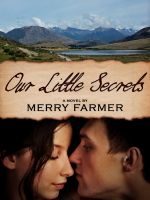
Michael West swore he would never fall in love again. So when the beautiful and wily Charlotte steps off the train looking for a new life he jumps at the business opportunity she presents. Engaged forty-five minutes after meeting, married the next day, Michael thinks he’s found everything a respectable man should have. Except that Michael is as far from respectable as they come. They agreed not to ask questions about each other’s pasts, but when the past seeps into their present Michael suspects his passionate new wife is not who she says she is. Too bad he’s already fallen in love with her.
Charlotte Baldwin has a secret. She fled Philadelphia to escape the sins of her past but someone is following her. What better way to hide than by marrying Michael West, Cold Springs, Montana’s enigmatic shopkeeper? A new name, a new life, and a passionate husband is exactly what she needs to leave her sins behind. But when it comes to keeping secrets Charlotte may have met her match in Michael. When a connection neither of them expects catches up with them, the shocking revelation means Charlotte may have run right into the arms of her enemy.
No sin stays a secret forever….
Buy Now @ Amazon & Smashwords
Genre – Western Historical Romance
Rating – R
More details about the author & the book
Connect with Merry Farmer on Facebook & Twitter

Trash Traditional Publishing and Pursue Progressive Planning – Ciara Knight

Trash Traditional Publishing and Pursue Progressive Planning
by  Ciara Knight
I’m honored to be part of the INDIESTRUCTIBLE: INSPIRING STORIES FROM THE PUBLISHING JUNGLE led by Jessica Bell, and backed by so many influential and talented authors.
Only in the world of indie publishing do so many authors band together to produce a helpful and insightful book. With twenty-nine essays about the publishing world created by experienced indie authors, I’ll be the first one to buy my copy.
Indie publishing is exciting, but is definitely full of obstacles. This is not a how-to guide. Instead, it is full of useful information including insights into the publishing world, successful experiences, passions about the business and individual writing.
In my personal essay, Trash Traditional Publishing and Pursue Progressive Planning, I share the trials and tribulations I faced when I diverted from traditional to indie publishing. I’ve also included insights of what I’ve learned to assist new authors to avoid the same pitfalls.
When a reader finishes this book, they will be inspired to share their own work with the world and be a little more equipped to trudge through the trenches brandished with personal knowledge to help them navigate the twists and turns of indie publishing.
CLICK HERE TO PURCHASE INDIESTRUCTIBLE 
100% of proceeds will be donated to BUILDON.org, a movement which breaks the cycle of poverty, illiteracy, and low expectations through service and education.
Contributing authors:
Alex J. Cavanaugh <> Angela Brown <> Anne R. Allen <> Briane Pagel <> C.S. Lakin <> Ciara Knight <> Cindy M. Hogan <> D. Robert Pease <> Dawn Ius <> Emily White <> Greg Metcalf <> Jadie Jones <> Jessica Bell <> Karen Bass <> Karen Walker <> Kristie Cook <> Laura Diamond <> Laura Pauling <> Laurel Garver <> Leigh Talbert Moore <> Lori Robinson <> Melissa Foster <> Michael Offutt <> Michelle Davidson Argyle <> Rick Daley <> Roz Morris <> S.R. Johannes <> Stephen Tremp <> Susan Kaye Quinn
About Ciara Knight:

Ciara Knight writes to ‘Defy the Dark’ with her fantasy and paranormal books. Her newest release, ESCAPEMENT, book I of The Neumarian Chronicles, is an Amazon bestseller. Her books have been released to acclaimed reviews securing Night Owl Top Picks and five stars from the Paranormal Romance Guild. Also, released in 2012, RISE FROM DARKNESS, book I of her Battle for Souls series, won July Book of the Month at Long and Short Reviews.

indiestructible
Need motivation and inspiration to self-publish, or sign that contract with an interested small press? Have you done all the research you can, but still feel ambivalent about the idea? “Indiestructible: Inspiring Stories from the Publishing Jungle” brings you the experiences of 29 indie authors—their passions, their insights, their successes—to help you make the leap into indie publishing.
This is not a how-to guide. This is the best of the indie tradition of experienced authors paying forward what they’ve learned, giving you information to help you on your journey. The personal essays in this book will leave you itching to get your work into the hands of readers and experience, first-hand, all the rewards indie publishing has to offer.
100% of proceeds from “Indiestructible” purchases will be donated to BUILDON.org
Buy Now @ Amazon
Genre –  Non-fiction
Rating – G
More details about the author
Connect with Jessica Bell on Facebook &  Twitter

5 Writing and Reading Myths Debunked. (Sort of) by Brad Cotton

Myth 1.

Everyone has at least one good book in them.

The Truth:

Writing is bloody hard. And, while everyone may have at least one story that will break your heart, putting it down on paper is not something innate. I can visualize a really great painting, but hell if I can paint it. I can fathom the coolest dunk, but I couldn’t reach the rim with a pogo stick and jet pack. Writing a great story takes a lot of practice and a lot of hard work. Granted, it comes easier to some, like dunking a basketball would to a seven-footer, but constructing a good sentence and weaving a comprehensive yarn are not something with which you’re born. Try it, of course, but know when to move to music or barn raising instead.

Myth 2.

Every book has some redeeming qualities.

The Truth:

Some books are just plain bad. They say that simply completing a novel is an accomplishment, and that the feat alone should be lauded. Nonsense. I can take the time to construct a car from scratch, but if it doesn’t drive, what I have is a mess in my garage. Sure, I’ve spent countless hours welding and molding and twisting a wrench, but that means very little if I still have to walk to the store. I’ve started many more books then I’ve finished. I’ve turned movies off in the middle. A very long time ago music composition was left to the true geniuses like Mozart and Brahms. Now all it takes is high school poetry and a Macbook. Some books should never be published, and that’s okay. While not every book has redeeming qualities, every would-be author certainly does.

Myth 3.

Publishing is hard.

My first two responses may seem a bit cynical, so I might just surprise you with this one. Publishing is easy — if you’re willing to take the time to do it yourself. My first book was published by traditional means. I queried agents and publishers, I got a book contract, I handed over my manuscript, and 9 months later a book arrived and I cut the cord. I’ve since spoken to many self-published authors and realized that doing all the leg work ones self is not only rewarding, but not really all that difficult. There are countless how-to websites, books, and personal accounts available at a glance. The Internet offers so many channels to publish both print and ebooks that the problem you may indeed face is which service to use. And, it’s cheap! You could conceivably go from manuscript to finished novel for under $1000. Should everyone do it? God no. Could they? Yes.

Myth 4.

Most Authors are eccentric and weird.

Authors are not eccentric w… Never mind. Authors tend to be eccentric weirdos.

Myth 5.

Printed books are dying.

Like local newspapers, printed books seem to being going the way of the Quagga. Never heard of a Quagga? Ever wonder why? One of the major contributors to the dying-book hypothesis is that you don’t have to look very far to find a Starbucks where your local bookstore once was. Well, you heard it here first: Printed books are alive and well. I’ve read a few books on my digital device, and sure, it’s handy-dandy when traveling or when I’m in need of over 500 novels at one time. But there is — and will always be — something about holding a real book in your hands that your digital device cannot replace. The smell, the texture, the sound of turning pages. The stains, the dog-eared pages, the torn cover… Wait, what was I saying? Right, while ebooks have overtaken printed books in sales, the good old paperback is here to stay. Forever. There will come a time when digital devices will be old hat. My niece isn’t impressed by technology the way her grandmother is. And, when the day comes that the power goes out, or we are taken over by a rogue alien colony, we’ll all be reaching for our yellowed hard copy of 1984 after working in the mines.

Boundless

Best friends Duncan and Ray run a successful bookie business in Phoenix. Outgrowing the life they began in college, the late twenty-something pair set out on the road with a plan to never return. Their trip takes them cross-country with eventful stops in Las Vegas, Omaha, and Niagara Falls. Along their journey they meet several colorful characters and even agree to bring a pretty young girl named Ruby along with them for the ride. Landing in Boston to run an errand for an old friend, the travelers begin to lay roots in an attempt to forge for themselves the life they’d always hoped for. Easier said than done. As romances begin to burgeon, and one of their lives is put in danger, the group quickly discovers that where they are may indeed have little effect on who they are.

Buy Now @ Amazon

Genre – Contemporary Fiction/Literary Fiction

Rating – R

More details about the author

Connect with Brad Cotton on Facebook & Twitter

Website http://www.bradcotton.com/

Yvonne Jones – The 5 Most Incorrect Misconceptions About The Military

The 5 Most Incorrect Misconceptions About The Military

by: Yvonne Jones

A smaller share of Americans currently serve in the Armed Forces than at any other given point in time since World War II. This, in turn, has led to a growing gap between people in uniform and the civilian population. With no personal exposure to the military and with the appearance of shows like Army Wives, it is no wonder that so many people have misconceptions about the military.

To counter this development, here is a list of the most frustrating misconceptions regarding the military.

#1 – NO EDUCATION

Many still hold the belief that joining the military is the route poor, uneducated minorities choose for lack of other options. This Vietnam-era image of the makeup of the military, however, bears no resemblance to today’s force.

Among new active-duty enlistees, 92 percent had a high school diploma or equivalent before enlisting (compared to 79 percent of comparable civilians).  Among officers, 95 percent had at least a bachelor’s degree before being commissioned, and more than a quarter of all officers have advanced degrees (although the majority of advanced degrees were earned while in uniform).  Additionally, before enlisting, new recruits on average scored higher on standardized tests and read at a higher grade level than their civilian counterparts. As such, new enlistees actually come into the service much better educated than their civilian compatriots. For a more detailed breakdown of the makeup of new recruits and officers, read D. Englin’s article here.

(http://www.tompaine.com/articles/military_misconceptions.php)

#2 – FAT PAYCHECK

If you want to live a life of luxury with no worries or cares in the world, I wouldn’t advise joining or marrying into the military. Even with the benefits, many service members do not make what their civilian counterparts earn.

Did you know that most military families with the rank of E-5 or below qualify for some form of governmental assistance? The base pay of a newly enlisted person is on average about $1,468. And while we do receive additional benefits, this level of income can still put a financial strain on a family.

Even during combat deployments, service members only receive about $575 extra per month, which, in my opinion, is not enough to risk your life for.

#3 – NO TAXES

Many believe that those in the military don’t pay taxes. I wish I could say that this was true. The truth, however, is that everyone in the U.S. (legally at least) pays taxes. Even in the military. All pay federal taxes, and most pay state taxes, depending on tax rules in their home of record. The only time a service member doesn’t pay federal taxes is when he or she is deployed to a combat zone.

#4 – BANKERS’ HOURS

The military is not a typical 9-5 job. A contracted set of hours and a regulation of overtime does not exist. Your service(wo)man is expected to be ready for duty 24/7. Yes, there are some days when the service member gets to go home early, but then there are other days when he or she doesn’t get to go home at all.

A regular work day counts an average of 7-9 hours, from Monday through Friday. If a service(wo)man is deployed, however, he or she is “on duty” all the time for the entire duration of the deployment, standing daily watches and not getting weekends off for months at a time.

#5 – ENLISTED VS. OFFICER SPOUSES

Thanks to shows like Army Wives, we now have a whole bunch of non-military viewers believing that officer wives dress conservatively and sip coffee at their officer wives’ clubs, while enlisted wives dress poorly and stuff their faces at the first fast food place they can find.

This misconception is one of the oldest and most worn-out spouse stereotypes ever: enlisted vs. officer wives. Enlisted wives are not trashy girls who have no class, and officer wives are not snobby country-club divas who act like they’re above everyone else. When it comes to being a military spouse, we are all exactly the same: someone who fell in love with someone who happens to serve in the military.

This list of misconceptions in this post is by no means a complete one (for a more extensive list with multiple categories, please check out my book “Closing The Gap: Understanding Your Service(wo)man”). But it’s a start; a start to help our civilian loved ones to gain a greater understanding of what it means to be a military family. My ultimate goal of every single post within this blog is to bring our way of life a bit closer to our extended families and friends within the civilian world, so as to strengthen the bond between civilian and military families.

What do you think are some of the biggest misconceptions that people have about military members, their spouses, and about military families as a whole? What stereotypes have you heard or thought regarding military life?

About the author:

Yvonne Jones is a military spouse of 13 years and counting.  After years of direct contact, experience and research in the field at hand, she knows the ins and outs of the issues covered in Closing The Gap: Understanding Your Service(wo)man, a book that is meant to reconnect Military Families with their non-military friends and family members by helping civilians learn more about the life within the Military.

Yvonne wants to thank her fellow Military Families and all those that so lovingly support them. This book is dedicated to you!

To learn more, please visit www.UnderstandingYourServiceman.com

Closing The Gap

Buy Now @ Amazon

Genre – Military Family

Rating – G

More details about the author

Connect with  Yvonne Jones on Facebook

Website http://www.understandingyourserviceman.com/

Emma Right – How To Promote Your Book Online

How To Promote Your Book Online

By: Emma Right

Of course every author now knows that a website is an essential. And the other thing about the website is that it must sell the author and not just focus on the book. Readers want to find out more about the authors and having the website dwell more on the authors and less on the books helps authors in their future efforts when other books come along.

Then, there’s social media:

Linkedin, Facebook, Twitter, and Pinterest, are the four major honchos. And make sure you have a fan page, like mine: http://www.facebook.com/KeeperOfReign.

If you haven’t already please sign up for these sites. RIGHT NOW!

These are the places you could try to promote your books:

1. Access B&N.com and Sony eReader via Smashwords.com

2. Publish your digital books on scribd.com . They make it fast and easy

3. Go to Alexa.com to check the status of your blog or website. Can search engines even find your site? And where are you for key word searches? Page 100? Tsk tsp, not good.

4.Compare your site to your competition with Web Confs SEO Tools

5.Claim your blog at Technorati, the leader in blog info.

6.Use Social Oomph or Hootsuite to get more out of your Twitter account. I am on Hootsuite now, but I heard their Premium membership which is just under $10 is useful. Trouble is I am Techie Phobic and it takes me a long time to wrap my brain around some of the things I’d have to do if I joined. Also, if you’re trying to tweet 24 times a day (like the marketing experts recommend), visit Twindication. It’ll make that possible.

7.Create your writer’s profile on Google Profiles.

  • 8. Set up your profiles/accounts on these pages:
  • Set up an Amazon Best Seller campaign
  • Set up your Amazon author’s page
  • Set up your Goodreads author’s page
  • Set up your Librarything author’s page
  • Set up your Shelfari author’s page

9. Create a hash tag for your book. How does #KeeperOfReign look?

10. Partner with other authors so you can help each other with your book launch–harness the power of networking. How do you think traditional publishers do it?They have been in the business for decades for the most part, and have built relationships, from who to write reviews for the next book coming out–notice how authors comment good things on others authors–probably they are all from the same publishing house. Indie authors have to learn to cooperate with one another too, so we can “act” like something bigger than just individual authors working separately.

11. Book some blog tours.

12.Advertise where the readers are—this is inevitable. If you believe in your book you’re going to have to invest in it.

Finally, having said all that, committing to a blog is probably the most essential of all the social platforms you are creating as an author. After setting up your blog, link it to your other social networks, so when you post a blog you can tweet it and also connect this to your Amazon author page and Facebook fan page as well.

image

Books written in blood. Most are lost, their Keepers with them. A curse that befell a people. A Kingdom with no King. Life couldn’t get more harrowing for the Elfies, a blend of Elves and Fairies. Or for sixteen-year-old Jules Blaze. Or could it?

For Jules, the heir of a Keeper, no less, suspects his family hides a forgotten secret. It was bad enough that his people, the Elfies of Reign, triggered a curse which reduced the entire inhabitants to a mere inch centuries ago. All because of one Keeper who failed his purpose. Even the King’s Ancient Books, did not help ward off that anathema.

Now, Gehzurolle, the evil lord, and his armies of Scorpents, seem bent on destroying Jules and his family. Why? Gehzurolle’s agents hunt for Jules as he journeys into enemy land to find the truth. Truth that could save him and his family, and possibly even reverse the age-long curse. Provided Jules doesn’t get himself killed first.

Buy Now @ Amazon

Genre - Young Adult Adventure Fantasy  

Rating – G

More details about the author

Connect with Emma Right on Facebook & Facebook (Keeper of Reign)

Website http://www.emmaright.com/Home.aspx

J.L. Lawson – Why Writing is a Form of Personal Therapy

Why Writing is a Form of Personal Therapy

By: J. L. Lawson

There is nothing like writing to allow your thoughts to coalesce into solid plot-lines, characters, settings… yes even opinions. I add opinions to that list of literary devices for the simple reason that if an author doesn’t have firmly held convictions on the topics that her/his writing touches, she/he will not have the necessary authenticity to convince their readership of anything but the most banal. Let me offer an example from my own meditations—which I generally refer to as my “pre-writing”—those relaxing hours after a day’s writing has concluded. I was at the time faced with how to verbalize, through one of my characters, a definite stance one way or the other on what was the clear distinction between what is assumed and believed, versus what can be readily verified and acted upon. I used my next blog post as a “therapeutic” outlet for sorting that issue out in my own mind. What follows is how that effort worked out for me.

“In a previous post on this blogsite, I outlined what is the scientific method and what is the specific nomenclature associated with that discipline. Here I would like to draw the reader’s attention to what is its antithesis. Namely: belief. For example, and I use this as merely the most obvious of the myriad demonstrations of non-reason rampant among our brothers and sisters cohabiting this blue marble: the Theory of Evolution.

One does not have to listen all too carefully during the space of any single given week to overhear someone declare, “I don’t believe in evolution.” Such a declaration is a non-starter in its essence, as well as a most indicative signal of the abandonment of our common inheritance that is Reason. Science is the culmination of our shared exploration of the world in which we live. It is the singular method whereby we as a species can establish a sound basis for shared knowledge and, hopefully, understanding. Yet however rich is that legacy, and how fruitful is its bounty, there are still innumerable persons of our family who have turned a blind eye and deaf ear to that inheritance.

Verifiable and repeatable experimental investigation and research which corroborates an idea, how ever discombobulating to an individual personally, does not require belief or disbelief. It stands. As Churchill pointed out most eloquently, “The truth is incontrovertible. Malice may attack it, ignorance may deride it, but in the end, there it is.” The unmitigated audacity of the thought that the act of “disbelief” can in some miraculous way change the reality of a given successful and reliable measure of the world in which we live depends far more on the supernatural than is either wise or safe. Further, such an abandonment of reason is tantamount to denying one’s own humanity. And I can illustrate such a statement rather simply.

The pervasive and systematic process of change observed to be a ubiquitous aspect of reality is the most obvious topic at hand for illustration: the Theory of Evolution. And please note the use capitalization because it is a proper name—not simply “evolution,” the natural process independent of theories. It has as its foundation an observable phenomenon, indisputably reliable with overwhelming evidence of its action upon and throughout the world and observable universe around us. What has so irked certain persons about this theory, however, isn’t that evolution doesn’t exist or isn’t observable, but that it applies to all of us—every single person or thing. And therein lies the rub; there are those who cannot imagine themselves so intricately bound to all that is around them.

The crisis of perception that allows a person to set him or herself beyond the sphere of all the rest of the natural world is: psycopathy—and I use that term with utmost discretion—which in its most basic sense is: a dysfunction of the psyche.

If that were the be all and end all of the crisis we could merely pity those with the condition and move on, however it’s not the condition in itself that is so troublesome, albeit heinously deluded. It is all the rest of the error-thinking associated with the condition that is in fact so dangerous. (Read: tip of iceberg and Titanic.) Underlying this “disbelief” is a miasma of magical thought so contrary to reality it threatens not only humanity but the existence of life itself as we know it. Once a  person sets him or herself apart from the fabric of common existence which we are in reality part and parcel, one inevitably feels oneself empowered, even mandated to assume all kinds of notions regarding one’s separate, most often self-described elevated, status. That separation is the root and cause of all that follows. Without a realization of our connectedness to all that surrounds us, one can so easily judge and condemn anything that strikes one as threatening to one’s lofty imperiousness. Even to the point of actually suggesting that there are some people worthy of compassion and others that are not. ACTUAL PEOPLE! But it doesn’t end there. In one’s misguided delusional state, all of Nature is then transformed to a condition of disposability. Through the generational maintenance of that delusion has been effected all manner of abuses upon this singular world of our common arising. All the ills of our history can be traced to this very dysfunction of perception: all war, every oppression, the existence of slavery, poverty and destruction, every act of pollution, reinforced and institutional malnutrition and hunger… even up to and including: disease.

The “justification” for all of this, which is so contrary to the sanctity of the very life that same person ostensibly cherishes, is so inanely touted as “righteousness” that it is absolutely relevant to describe it as psycopathy—NOT a matter of belief or disbelief—And therefore completely antithetical to sentient and sapient life everywhere, let alone the achievement of a scientific legacy. It is a blatant disregard of our birthright of Reason: a willing abdication of obligation, responsibility and integrity.

It is not a stretch to suppose that what was actually in the mythical box which according to legend Pandora opened and unleashed upon the world was: Ignorance, i.e.: Belief without Reason, and though the box appeared to be empty after the beast was loosed there was left inside only: Hope. And for all our sakes, let’s not lose sight of at least the possibility of man’s possible psychological evolution. There is a scientific basis for that hope.”

So, with that in hand, I hope you will take the time, when faced with a similar issue or set of issues to put your thoughts into words, massage the words and come to a greater clarity for yourself at least. I guarantee that your readers will appreciate having something of substance to chew on rather than a poorly assembled patchwork of if’s and maybe’s.

An Honest Man

Buy Now @ Amazon

Genre - Metaphysical/Fantasy/Action Adventure

Rating – G

More details about the author & the book

Connect with J.L. Lawson on Facebook

Website http://voyagerpress.org/

Weigh Anchor

Buy Now @ Amazon

Genre - Science Fiction/Metaphysical/Adventure

Rating – G

More details about the author & the book

Connect with J.L. Lawson on Facebook

Website http://voyagerpress.org/

The Elf & Huntress

The Elf & Huntress is the beginning of a long and winding trail from power to obscurity, from infamy to glory for a naïve lass from the highlands. On a simple off-planet assignment she's dragged screaming into an underworld she couldn't have fathomed existed. A scarred and liberated prisoner, she rises to become the feared Captain of the Lascorii Secret Services, avenging nemesis of the vilest pirate plaguing the worlds underwritten by the Seranath Trade Guild, with a hand-picked crew---and one diminutive, rather officious Seranim Guild Agent who learns for herself that Wish is the most powerful thing in the Universe...

Buy Now @ Amazon

Genre - Science Fiction/Metaphysical/Adventure

Rating – G

More details about the author

Connect with J.L. Lawson on Facebook

Website http://voyagerpress.org/

a Rafflecopter giveaway

Justin Blaney – Successful Nonprofits are Founded on Experience

Successful Nonprofits are Founded on Experience and Unique Solutions

by Justin Blaney and Jon Bell

More people are starting nonprofits today than ever before.

Many founders are millennials with fresh ideas and limitless energy.

There are big upsides to this social explosion. Such a large number of engaged citizens is making a huge positive impact on the world. It’s a great time to work in the nonprofit sector because the huge influx of talent and energy can be used to fuel entirely new initiatives from the ground up in less time than ever.

But the downside is many of these young social entrepreneurs don’t have the experience necessary to accomplish their goals. They often don’t realize there may be others who are already addressing the issues they’re passionate about. And they may attempt to enter an existing marketplace without having a highly unique angle to address the problem they’re aiming to solve which can result in wasted resources and frustration.

If you’re a young social entrepreneur, here’s our advice.

Before staring a new social enterprise, search for existing nonprofits who are already doing great work in your area of interest. There are over 1.5 million nonprofits in the United States alone. Any problem that needs solving has likely already attracted thousands of nonprofits. And many of these nonprofits have been working on solving such problems for decades.

Rather than competing with those who are already doing the work, you should spend time mentoring under your future competition, learning which mistakes can be avoided and picking up a few leadership skills along the way.

You might think you have a unique way of addressing a problem and you might be right. But that problem will still be waiting for you a few years down the road. Take time to learn from those who have been doing this a while before wasting thousands of donor’s dollars making avoidable mistakes.

If you want to address education policy in Washington D.C., spend a few years as a public educator in an elementary school first. Volunteer at your church’s sunday school. Intern under a politician or activist. Gather experience from varied sources, then bring those experiences together as you craft your unique solution to the problem you want to solve.

You’re going after the same donors as 1.5 million other nonprofits, a nearly impossible task without a highly unique solution and experience. Rather than competing with other nonprofits in your area of interest, learn from them. Leverage their networks. Collaborate.

You might even try giving your ideas away. If another nonprofit uses your ideas, it affirms your talent and your vision. And, if your ideas are so good that other people are using them, you’re probably going to have a lot more good ideas in the years to come.

About the authors

Justin Blaney is the #1 bestselling author of Evan Burl and the Falling. He’s a blogger at JustinBlaney.com and I4J.org, the creator of Isfits, and a film producer with Inkliss. He lives outside Seattle with his wife and three daughters. Connect with Justin on Facebook, Twitter or Youtube.

Jon Bell is the director of Live58, an organization aiming to end poverty.

Evan Burl

My father abandoned me when I was an infant.
My friends have turned against me.
My uncle beats me.
The most powerful men in the world want me dead.
They all have one thing in common.
They think I’m turning into a monster.

I’m starting to worry they’re right.

Genre - Young Adult

Rating – PG

facebook_ad_3 200

Giveaway Link

More details about the author & the book

Connect with Justin Blaney on Facebook & Twitter

Website http://www.justinblaney.com/

Owen Banner – Writing in First Person

Finding Your Voice: Writing in First Person

by Owen Banner 

They used to tell you never to write in the first person. The recent trend in Young-Adult literature and other popular fiction, however, has proved that it is possible to write a compelling, successful story in first person narration. So how do they do it?

The first thing to keep in mind is that in first person narration, you must restrict yourself to speak only from your character’s unique perspective, intellectual capacity, emotional state, and cultural background. This means that when tempted to use that eloquent metaphor or that witty zinger, you have to ask yourself, “would my character really say this?” Create a character card of that character and read through that card before you begin to write any scene that the character is involved in.

The trouble with being restricted to speaking through a character, however, can result in some very boring or repetitive prose. When it comes down to it, first person narration is a conversation between the character and the reader. And, let’s face it, most of us don’t sound very interesting when we are just talking to a friend. The key to overcoming this obstacle is in crafting a unique vernacular for that character based on the place where they live and their history. This means that a boy who works on a shrimp-boat in Louisiana is going to have a different speech pattern than a Kibuki dancer in the late 1900’s. Do some research, read some autobiographies, watch some interviews and immerse yourself in that person’s culture. This also means crafting metaphors that are indigenous to a character’s geography, history, occupation, and social group.

Another drawback to writing from a first-person point of view is that you can’t directly tell your reader what other characters are feeling and thinking. You are also limited in the amount of exposition you can include in a scene, because your narrator doesn’t know everything. This drawback is actually just an opportunity to refine your writing. A common and glaring mistake in third person narration is giving too much straightforward information and exposition. You are omniscient as narrator, so you feel the need to fill the reader in on all the details. This comes across as condescending, lazy, and boring. First-person narration kicks that crutch out from under you, by forcing you to find creative ways to explain what other characters are feeling and thinking and to give background on them. Use dialogue, gestures, appearance and interaction with the environment to communicate those essential thoughts, feelings, and facts about those characters.

And lastly, watch your verbs. Just because you are narrating in first person and trying to make the conversation sound natural, does not mean that you have free license to use passive and past-progressive verbs. Keep your verbs active.

How about? What have you found to be essential for writing in the first person? What clearly doesn’t work?

Hindsight

“I am hurtling eight stories to the pavement. There’s a bullet in my left shoulder and another chewing through my lung. I am going to die.” – Shirley O’Shea

When Shirley got out of prison three years ago, he committed himself to being there for his sister, Haley, and his aunt, Winnie–the only family he has left. Then he met Isaac, a man with connections to his grandfather and to the IRA. Isaac said he owed Shirley’s family a favor: deliver a package and get some money. But things are never that simple, are they? What should have been an easy drop-off blows Shirley’s world apart. Now he’s on the run, a continent away from those he loves, trying to figure out what he’s gotten himself into, who he can trust and how far he’s willing to go in order to keep his family safe.

But Shirley has a few skeletons of his own banging on the closet doors, and the hinges are starting to come off.

Buy Now @ Amazon

Genre - Thriller

Rating – R

More details about the author

Connect with Owen Banner on Facebook & Twitter

Website http://www.owenbanner.com/

Samantha Warren – A Day In The Life of Author Samantha Warren

A Day In The Life of Author Samantha Warren
By: Samantha Warren

What’s life like for a fantasy writer who milks cows in her spare time? Messy, creative, and very odd.

4am: OMG, who changed my alarm? It’s too early for this. Holy crap, it’s already 4?? Gah. I roll out of bed and stumble downstairs to get ready.

4:15am: I plod to the barn, watching carefully for rogue skunks or possums that may have sneaked into the woodshed/hallway during the night.

4:17am: After getting the coffee pot brewing, I proceed to get covered in cow poo for the next three hours.
7:30am: Shower, breakfast, more coffee.

8am: I wander upstairs, plop down in front of my computer, and immediately get distracted by Facebook.

10am: Wired with coffee, I finally pull up yWriter and get my butt writing.

At some point during the day, I usually curl up for a bit of a nap and a recharge. I take frequent breaks from writing so I don’t get a bigger writer’s butt than I already have. Penelope, my tortoise shell feline, wanders in and talks to me for awhile, eventually curling up in the box below the window.

3:45pm: Where did my day go?? Cursing whoever sped up the day, I run downstairs to get ready to go to the barn again.

4pm: Again, I get covered in poo. Milking cows is a dirty job. Mike Rowe, eat your heart out.

6:30pm: I come inside, wash up, eat dinner, then check Facebook and email one last time.

7pm: I climb into bed, determined to read for an hour before I go to sleep.

9pm: I finally put my Kindle away, mentally curse the author who is screwing up my sleep schedule, then curl up and go to sleep. And that’s a day in the life of me, Samantha Warren, fantasy writer and milkmaid extraordinaire.

The Iron Locket
She was raised to hunt faeries. He was raised from the dead.
***
Aiofe Callaghan comes from a long line of faery hunters. Hired by one of the faery queens, they protect the human world from chaos and destruction. But when Aiofe stumbles through an open door into the land of Faery, she discovers the job isn't as simple as it seems, and neither is she.
Arthur Pendragon spent centuries in blissful nothingness, until the day the four queens banded together to raise him from the dead. Along with his twelve most talented knights, he leads the warring armies of Faery against the greatest enemy they have ever known: one of their own.
Can they overcome their differences to confront the greatest challenges either of them have ever faced?
Buy Now @ Amazon & Smashwords
Genre - Paranormal Romance
Rating – PG
More details about the author
Connect with Samantha Warren on Facebook & Twitter

Adele Park – Don’t Surrender the Fate of Your Books to Publishing Executives

Don’t Surrender the Fate of Your Books to Publishing Executives

by Adele Park

Have you unconsciously surrendered the fate of your novel to the whimsical tastes of publishing executives?  Do you think your book can’t move forward without the financial blessing of others?  Agents and publishers can certainly boost our careers, but I’m not sure they can break them.  In all likelihood, our destiny lies in our own hands.  It took several years worth of groveling at the heels of those in the publishing industry for me to comprehend this.

Even though you’ve probably spent years visualizing the success of your book, how much time have you devoted to thinking about the specific things you want to achieve?  Perhaps you have a vague fantasy involving money and fame.  These things are definitely desirable, but chances are there’s more to it than that.  The act of creation ignites something within us, even if we can’t put our finger on it.  There’s a lot to be said for fully experiencing the moment we are in.

Many of us hold our own dreams hostage by assuming things have to play out in a specific manner.  In my case, I wrongly believed the only way to turn my manuscript into an audio book was to first have it published in hard back.  Under this scenario, I would have had to sell a barn full of books before anyone would ever consider producing it in audio form.

Once I understood I had control over my own dreams, I formed an LLC called Straight to Audio Productions and produced my first audio book.  I recorded and edited an 8.5 hour project using nothing but a mic, a mixer and a laptop.  Miraculously, I was able to get my project listed for sale as an mp3 download on Audible.com.  After that, I built an actual studio and went to work recording Jitters-A Quirky Little Audio Book.  That project went on to win a 2011 Audie from the Audio Publishers Association in the multi-voiced category.    

If you are having trouble getting through to the top brass in the publishing industry, try to find the courage to publish your book anyway.  E-books and desktop publishing companies make this process inexpensive and easy to do.  Don’t miss the chance to live your art just because things aren’t happening exactly the way you had envisioned.  Outcomes are over-rated anyway.  The biggest thrills come from fully experiencing the projects you’re passionate about.  Completing something you’ve been working on for a long time can be anti-climactic, so the trick is to enjoy the process.  Whatever you do, try not to get attached to the outcome.

When you run out of ideas, wing it.  I’ve met very few people who work in the audio book industry, so in my business I make everything up as I go.  Sure, I’ve taken a few wrong turns, but it’s definitely been an interesting journey.  This lack of an industry blueprint has left me free to dabble with different ways to tell a story.  Unlike most audio books which have one person doing the voices for all the characters, my audio books feature full cast of actors who tell their stories directly to the listener.  I’ve also taken the liberty of experimenting with different forms of narration.  Since the lead character in Jitters is a radio shock jock, I thought it would be interesting to narrate the story through a series of newscasts.  With Yikes! Another Quirky Audio Book, I used a series of narration pieces called “Examine Our Navel.”  Like it or not, I probably couldn’t float this idea to any traditionalists in the audio book industry.

It might seem risky, but there are advantages to “going rogue.”  For one thing, you don’t have to follow any rules.  Don’t be afraid to explore the unknown.  Some of the best stuff comes from impromptu moments.

I’m sure we would all love to spend a few days in the Gucci shoes of the publishing industry elite, but let’s not assume this group has it better than we do.  Along with the perks comes more pressure.  Rather than focusing on what our project lacks, perhaps our energy would best be spent being grateful for what we already have.  Besides, there’s no telling where our books will end up – not knowing is half the fun!

Buy Now @ Audible

Genre – Comedy / Satire

Rating – R (language & theme)

More details about the book

Connect with Adele Park on Facebook

Blog http://adeleparkquirkyaudiobooks.blogspot.com/

Website http://www.yikesaudiobook.com/

Brie McGill – Inside the Mind of the Author

Inside the Mind of the Author

by Brie McGill

“Button your collar: it’s the difference between an A and a B!” said my dad.

I’m pretty sure I unbuttoned it when he wasn’t looking.

Everyone is taught to conform, and to some extent, conformity necessitates civilized life. Everybody dresses up for an interview to win a well-paying job, to buy the pretty little house with the pretty little yard. Some people can even afford a cleaning lady, and everyone generally avoids looking crazy at all costs.

The author knows that beyond the pretty little yard, inside the well-kept, pretty little house, on the second floor, from the ceiling at the end of the hall dangles a rusty pull-chain, invisible to the untrained eye. Tugging the pull-chain unveils a secret stair to an attic, full of family secrets, both forgotten and intentionally buried.

The author is the only person crazy enough to enter the attic: it is a private, dusty space, overflowing with the madness of the past.

The author opens an old trunk and pulls out a Lamborghini-red faux fur coat that belonged to Aunt Tilly. Mad Aunt Tilly drank herself to death, leaving behind seven sad cats and an eerie porcelain doll collection that put popular horror flicks to shame.

Slipping his arms into the jacket, the author scavenges deeper into the trunk, feeling his fingers lock around the cold barrel of Grandpa Martin’s gun from the war. (What kind of nutjob stores a gun inside a random trunk of memorabilia, anyway?) The author slings it over his shoulder and muses sadly how Grandpa Martin never did fully recover from the trauma he endured during the war. It was advised not to make any quick movements in his presence: cousin Dirk was still regretting that one, from six feet below the ground.

Ah, yes, Dirk’s graduation cap is buried in the bottom of the trunk, too!

Uncle Nelson owned a company that manufactured galoshes–he was a stalwart man, fond of gambling and Cuban cigars. There is a hideous pair of day-glo orange galoshes beside the trunk in the attic; trembling, the author steps into the galoshes. The old boots still reek of expensive tobacco.

Everyone has an attic packed full of similar items, similar stories. But the author clothes his work–clothes himself–head to toe in these memories, these people, these impressions, and dares to walk the streets in something crazy, like a bright red coat, graduation cap, and orange boots, toting a defunct gun.

The author’s goal is to successfully weave a story with his tapestry of memories, so that when he roams the street, strangers approach him and resonate. To hear the words, “My crazy cat lady grandma has a coat just like this!” makes him smile: the quirky, the embarrassing, the outdated, suddenly feels normal, and his bizarre costume serves as a catalyst for strangers to find common ground.

The author’s mind is like the attic, a secret place, seemingly out of view, bursting with impressions and memories that don’t match the veneer of the perfect house and the perfect yard. The author knows, deep inside, everyone that toils to survive has become out of touch with secrets and memories locked in his own attic.

The author writes to remind everyone of who they fully are, of those shadows and distant laughter echoing in the corners of the mind, of the totality, the craziness, the sorrow, the irony and the joy of the human condition.

Eccentric appearances are secondary.

Kain

Counting days is irrelevant in the life of a well-to-do man, unless he counts the days passed in total service to the Empire. Salute. Submit. Shut up and scan the wrist. Therapists armed with batons and brass knuckles guide the derelict along a well-beaten path to Glory.

When human experiment Lukian Valentin escapes the Empire to save his crumbling sanity–through a grimescape of fissured highways, collapsing factories, putrescent sewers–he realizes the fight isn’t only for his life, it’s for his mind. Torturous flashbacks from a murky past spur him on a quest for freedom, while the Empire’s elite retrievers remain at his heels, determined to bring him home for repair.

Lukian needs one doctor to remove the implanted chips from his body, and another to serve him a tall glass of answers. Lukian attempts a psychedelic salvage of his partitioned mind, gleaning fragments of the painful truth about his identity.

A scorching, clothes-ripping rendezvous with a mysterious woman offers Lukian a glimpse of his humanity, and respite from his nightmarish past. It also provides the Empire the perfect weakness to exploit for his recapture.

To rise to the challenge of protecting his new life, his freedom of thought, and his one shot at love, Lukian must reach deep into his mind to find his true identity. To defeat the Empire, he requires the deadly power of his former self–a power that threatens to consume him.

Buy Now @ Amazon

Genre – Sci-Fi/Steamy Romance

Rating – R (18+)

More details about the author

Connect with Brie McGill on Facebook & Twitter

Website http://www.sexdrugsandcyberpunk.com/

Peter Cunningham – Why Choosing Your Setting is Important

Why Choosing Your Setting is Important
by Peter Cunningham
Setting in a novel is crucial. Whether your novel is set in the White House, or in a submarine, or the headquarters of the KGB, or in the board room of a Wall Street bank telling detail is paramount. I once knew a lady researcher who worked for the famous novelist Morris West. West would write to her with requests such as, ‘Give me a fresco in Pisa’, or ‘Let me have a nineteenth century kitchen in Scotland’. When a reader comes across such details, usually early in a book, his or her trust in the story becomes a reality and the crucial suspension of disbelief follows.
They say you should write about what you know. Ian Fleming worked briefly in the British Secret Service; Saul Bellow grew up in Chicago, the city that was to form the backdrop to many of his novels. John Updike was a product of the suburban America he so immortalized.
I began my writing career with a number of thrillers that required extensive research. I enjoyed being in the Negev Desert, and the Australian outback, being part of a DEA squad in New York City and standing in the frenzy of the oil trading pit in NYMEX, New York.
But then, something happened that changed my life. Peter, our eldest son, a golden boy, died at the age of sixteen. I was plunged into an inner world of grief and personal torment that I had not known existed. It was in this dark and utterly lonely place that I reached out and began to touch the parts of my own life that I knew so well but had, in my writing at least, either overlooked or forgotten.
I was born and raised in the city of Waterford, in the south east of Ireland. Waterford is Ireland’s oldest city. It was here that the English king Henry II landed in the mid-12th century to begin his conquest of Ireland. From my earliest memory I had been part of the streets and alleyways, terraces and intriguing hidden squares that make up Waterford’s medieval city.
The county of Waterford is one of the most beautiful in all of Ireland. Its coastline of cliffs and coves, its sandy beaches, tiny islands and exquisitely scented valleys were all laid down in my mind and imagination from the time I could walk.
When I resumed writing, as I tried to cope with our enormous tragedy,  I decided that from then on I would set my books in the city whose every bend of street and house gable was familiar to me, and whose hinterland of mountains and sea I knew like the back of my hand.
Since my books would be set, largely, over the span of the twentieth century, I soon found a problem that I had not anticipated: Waterford City had changed a number of times in that period. And so, a man walking from his house in Ballybricken in, say, 1922, and proceeding downhill to the Quay that flanks the River Suir, would have passed different buildings, shops, houses and institutions than his successor making the same journey in the year 2000. Records for the intervening years were imperfect.
The most familiar setting I knew had already thrown me back into research, or so it seemed. I decided to do something different. I decided to invent a town, called Monument, which would be closely modeled on the Waterford I knew. Monument would have a mighty river beside it; but that river would now be called the Lyle, not the Suir. I made a detailed map, naming my streets and squares, but always with their Waterford counterparts in mind. This was a most liberating experience, for it meant I was free.
I applied the same solution to the hinterland, coming up with coastal places, villages, even a range of mountains. With the confidence of my real setting, now re imagined, I could concentrate on the characters in my books, their loves and lives, their fears and hopes as never before.
These books, now called the Monument books, are being made available as ebooks. The first, ‘The Sea and the Silence’ is now published.  It is set in this town I knew as a child, beside the sea I swam in, along the beaches I have walked since my earliest days.
1562x2500_kindle_seaandsilence
A book for your head and your heart. Winner of the Prix de l’Europe 2013.
A powerful novel from one of Ireland’s best writers on the turbulent birth of a nation, and the lovers it divides
Ireland 1945. Young and beautiful, Iz begins a life on the south-east coast with her new husband. As she settles in to try and make her life by the ever restless sea, circumstances that have brought Iz to the town of Monument are shrouded in mystery. However, history, like the sea cannot stay silent for long. The war in Europe is over, and change is about to brush away the old order. Soaring across the decades that follow Ireland’s newly won independence, sweeping across the fierce class issues and battles over land ownership that once defined Irish society, The Sea and the Silence is an epic love story set inside the fading grandeur of the Anglo-Irish class.
Buy Now @ Amazon
Genre - Historical Fiction/Historical Romance
Rating – G
More details about the author
Connect with Peter Cunningham on Facebook & Twitter

Nadine Ducca – Improving Your Writing Skills

Improving Your Writing Skills

by Nadine Ducca

If I knew then what I know now…

Back when I was a teen, fiction writing meant mixing some words together and finito, another completed scene! Writing meant giving my imagination a free pass and seeing where it would take me (the result usually ended up drenched in purple prose). I thought that my writing would improve if I simply practiced more. I guess my logic was on the right track, but something was missing. How can you improve by yourself if you don’t have anyone to guide you? Constant practice is essential in becoming a successful author, but it’s not the only thing you should rely on. After a couple years of serious writing, I’ve come to the conclusion that there are four basic pieces of advice every aspiring author should know:

1) Read everything: Good books, bad books. If you can discern between good and bad literature, great! Don’t plagiarize other authors, but pay attention to how they show a scene, how they express the story on the page. See where and how they end their chapters. What moves you? Why? Go back and revise the scene and find the parts that especially caught your attention. What about the dialogue? And the nuances hidden in the action?

2) Study: We use textbooks when studying languages, chemistry and mathematics, so why not use textbooks to study how to write? Why not sign up for a course? If you are an aspiring author but have trouble finding where to start, enrolling in a writing course can help boost your confidence and keep you motivated—as well as guide you in the right direction! An added bonus of taking a course is that you might meet other people who share your passion, and there’s nothing better than that! You can also find oodles (don’t you just love that word?) of writing tips and information on the Internet. There are hundreds of blogs run by authors who do everything they can to help anyone with an itch for writing. The Twitter hashtag #writetip can also help you find links to interesting writing advice. If you would like some recommendations on books for honing your craft, there are several posts on my blog:

Self-Editing for Fiction Writers

Beginnings, Middles, and Ends

The Emotion Thesaurus

Characters, Emotion, and Viewpoint

Starve Better (guest review by Steven Young)

3) Share: Friends and family can feel like either a blessing or a curse. Some will indiscriminately love everything you do, while others will be critical down to the final period. Neither situation will help you grow much as an author. In my opinion, the only people who can offer you real support are those who have no direct relationship with you or the story—but a great desire to help. “Where can I find these glorious people you speak of?” you might ask. Shed your shyness and join a writing group. Critique Circle is a fabulous one (you can find me there). Put your work in front of CC’s critical eye and get ready for a whirlpool of constructive feedback. But beware! You have to be prepared to accept criticism. Not everybody is going to like what you submit, and you have to understand that. However, every critique is done with the best intentions, so don’t immediately disregard a comment because it makes you uncomfortable. If you join a writing group, you also have to be ready to give critiques. I’ve learned as much giving critiques as receiving them, which leads me to my final point.

4) Help others: Don’t keep it all for yourself! Giving back is part of the beauty of sharing your writing. Give critiques, read other authors’ work, and be kind and helpful. You won’t just be helping your peers; you’ll also grow as a writer.You wouldn’t imagine how much you can learn from critiquing other people’s work. It’s usually easier to catch mistakes in someone else’s writing. Let’s face it: you know your own story so well that you actually have greater chances of letting things slip by you. It happens to all of us: we read what we think is there—not what’s really there. By critiquing, you become more aware of possible issues that might appear in your writing. For example, as a critiquer, I’ve encountered submissions where the point of view shifts drastically mid-scene, or where the verb tenses hop back and forth between past and present. Because I’ve seen these issues in other people’s work, and because I’ve pointed them out and offered suggestions to improve them, I’ve become more aware of them, and never let them slip into my own text. The best part of this is that you help out another writer. You forge a relationship; a friendship. And that, folks, is priceless.

What do you think? What else can authors do to improve their writing? I’d love to read your suggestions!

Serving Time

Life and death have been industrialized. The Forge, the birthplace of every soul, is a rumbling factory owned by the goddess Time, managed by Lucifer, and powered by the labor of demons and imps. In this dystopian world, a renegade interplanetary pilot running from his past doesn’t stand a chance.

Handling Neptunian meth and dodging security cannons are all in a day’s work for Tristan Cross—not that he’s one to complain. Working for the smuggling company StarCorp is an improvement over what he used to do for a living.

However, when StarCorp gives Tristan a one-way ticket into the brainwashed—and disturbingly suicidal—Loyal League, he decides to run from the company and start a new life in the only safe haven he knows: Earth. With the help of his brother, Tristan embarks on the most hazardous journey of his life, one that will place him at Time’s mercy. Little does he know the demons running the universe are craving a feast, and his own soul is the next item on the menu.

Buy Now @ Amazon

Genre – Science Fiction/Fantasy

Rating – Adult

More details about the author

Connect with Nadine Ducca on Facebook

Website http://nadineonwriting.blogspot.com/

Pavarti K. Tyler – How to Meet Deadlines and Remain Sane

How to Meet Deadlines and Remain Sane
by Pavarti K Tyler
When I look at my looming to-do list, I often feel a sense of dread, a building terror which threatens to consume me, overwhelm my senses and send me into a weeping mess of nerves hiding in the back of my closet.   You think I’m exaggerating, that I’m being overly hyperbolic.  I’m not.  The giant dog has often nosed open the closet door and tilted his head in confusion over what in the world I’m doing.  Silly people.  Thumbs make you all weird.
But in trying to return the closet space to my husband’s shoes, I have taken to trying to balance this whole work/life/writing/marketing/kids balance thing.  And I’ve found that one thing above all else helps me maintain my cool.
Be Reasonable
Setting reasonable expectations is the name of the game.  I cannot reasonably be asked to perform cardiac surgery anymore than I can be reasonably asked to crank out a perfectly edited and formatted 100,000 word novel in one month.  It is simply not going to happen.  I’m not that person.
Yes, there are people who can do it.  Perhaps if I really buckled down I could too.  But then, all the other things in my balance matrix would be sacrificed and that’s not conducive to a happy closet-free Pav.
This is important in all aspects of the editing process.  How long will your BETA readers take, how long will a content edit and subsequent line edit take.  Do you want ARCs available in advance of publishing?
Personally, I don’t do well with tight deadlines.  That pesky panic disorder makes me overly neurotic about making sure everything is done at exactly the right time and in exactly the right order.  Just ask my publisher, it’s my first book with Evolved and I’m already making them loony with my constant requests that things be done early.  Why early?
Build in a Buffer
You will have setbacks.  You will find that during the editing process you completely forgot to wrap up that tertiary subplot you wove in.  Crap!  Now you have to edit chapters and write a few extra to slip in.  That times time.  This will happen.  And when it does you have the choice to either delay your release (Ack!) or do a rush (read crappy) job.
However, if you’ve built in a buffer, when your crit partner bails on you half way through your MS and you have to find another or your editor takes an extra month to finish your book despite the deadline you agreed on, you still have time.  Life happens and even the best people sometimes flake. If you assume it will happen you will remain calmer.
Sounds pessimistic doesn’t it.  But that’s not how I mean it.  What I mean is, by setting reasonable expectations and then building in some buffer time, you are poised for stress free success.  But start making promises you can’t fulfill even if all the stars aligned and you will be the one perceived as the flake.
Time Table
If everything goes well and I write everyday and meet my word counts, a 60-80k book will take me 6-8 months.  So I give myself a year.  Granted, during that time, I’m usually editing, proofing and sometimes even writing other projects, so that’s not to say I take a year and do nothing but that one thing.  But it means I’m not going to commit to anything being done before then.  After that I like a month for BETA readers/crit partners and self editing, then another 2 months for the editor to work their magic.  Once the final edit is done, I like ARCs ready to go 2 months before the release date.  Add a month for inevitable shenanigans and I plot out 18 months for a book to launch.
Can it be done faster?  Sure.  White Chalk was written by 6 months.  When it launches it will be less than a year from when I started it.  Awesome huh?  The crowd roars and I take my bow.  I’m thrilled to have it out like this, but if it took longer that would have been okay.  Having it out quickly is nothing but a success.
So what’s my advice for staying sane with deadlines?  Plan for them with an outlined timetable, set them reasonably, and build in a buffer.  I just recently turned in my final draft of Sugar and Salt, an upcoming erotic novella to my editor.  It comes out in December.

White Chalk
Chelle isn’t what most people consider a typical 13-year-old girl—she doesn’t laugh with friends, play sports, or hang out at the mall after school. Instead, she navigates a world well beyond her years.
Life in Dawson, ND spins on as she grasps at people, pleading for someone to save her—to return her to the simple childhood of unicorns on her bedroom wall and stories on her father’s knee.
When Troy Christiansen walks into her life, Chelle is desperate to believe his arrival will be her salvation. So much so, she forgets to save herself. After experiencing a tragedy at school, her world begins to crack, causing a deeper scar in her already fragile psyche.
Follow Chelle’s twisted tale of modern adolescence, as she travels down the rabbit hole into a reality none of us wants to admit actually exists.
Buy Now @ Amazon
Genre - Literary Fiction/Coming of Age
Rating – R (15+)
More details about the author
Connect with Pavarti K Tyler on Facebook & Twitter


Review:


White ChalkWhite Chalk by Pavarti K. Tyler
My rating: 5 of 5 stars

Describe 2 different settings or locations. When Chelle gets out of Troy's truck and she says, "I expected to feel happy but instead I felt kind of sad and really tired." When Chelle's father finds Troy in her bed. Both scenes were strong contrasts of emotions but had one thing in common, they displayed Chelle's sadness.

If you could rewrite the ending, would you? When I got to the end, I wanted to scream, "no" but then as I digested each part of the book and I did think about rewriting the ending, I realised I couldn't. It had to end the way it did. Sometimes, there isn't a way out.

List the five major events in the story in the correct order. Chelle's home life is a wreck. She meets Troy who seems to be her knight in shining armour until she finds out that he doesn't feel the same way. Troy starts to date Xiu. Then, there's Mr.Harris, the only person who seems to offer her some kind of support. Chelle starts to slip in ways many teenagers do.

Disclosure: I received a review copy of this book from the author.

View all my reviews

Carla Woody – What Inspired Me to Write Portals to the Vision Serpent

What Inspired Me to Write Portals to the Vision Serpent

by Carla Woody

Portals to the Vision Serpent is a coming-of-age novel, a young man’s journey into shamanism and the Maya world on a quest to find himself. Here’s a quick synopsis.

Preston never felt he belonged, like many of us. He feels an ongoing sense of isolation and longing for connection. He doesn’t have strong ties, except to the invisible realm—and he can’t share that with others. He doesn’t really know who he is. The not knowing is painful. He begins to recall memories of early childhood when Mama Luna, a brown-skinned woman, cared for him after his father disappeared, and his mother began her frequent absences. Mama Luna opened him to things his heart calls out for now. But she vanished long ago. The story moves back and forth from childhood to present-day as Preston seeks to resolve his ever-present discomfort, and to discover his origins and path in life. His is an initiation journey, carried by faith, to fill the gaping hole left by not knowing his people, even as they insistently call to him.

My inspiration for the story actually came first out of my own search—and then the lifework that resulted from it. So parts of the story have been with me for many years. The themes I drew on are self-discovery, family genealogy, travel as a spiritual journey, and the importance of indigenous traditions.

Through circumstances and family secrets, I didn’t know my own lineage. It left a hole. I was drawn to Native American traditions even as a young child, long before I knew why or even much about the cultures. In later years after, having met many indigenous people, I noticed that they’d identify their village and clans going back a few generations. I’d been told the purpose was to offer any mutual connections. But it’s also a clear statement of identity and place in the world that gives them strength. Hearing these introductions always stirred a yearning in me. Strangely, when I was writing the novel, some things unfolded fairly quickly, giving me many of the answers to my own questions. I wrote about it on my blog in a post called
Lineage: Calling on the Ancestors.

I’ve been mentoring people for over twenty years on how to live through their deeply held values. Most people don’t. I had to come to that myself. Depending on how out of sync you are, it can cause great emotional turmoil and feelings of loss. One of the things I offer are spiritual travel programs visiting sacred sites and ceremonies with Native leaders and healers who serve their own communities. Over many years of travel, I’ve been fortunate to build relationships with such people who offer themselves as powerful conduits. It takes a lot of courage for travelers to engage that way. When you put daily life on hold and drop yourself into an unfamiliar environment, you can rediscover what you forgot. It’s life-changing. The novel shadows Preston as he goes through this process.

In 2007, I formed Kenosis Spirit Keepers, a nonprofit organization. Our mission is about preserving indigenous traditions that are in danger of extinction. I donate ten percent of profits from all my books to help support our projects. I’ve personally witnessed the wide occurrence of acts done again Native people and the land they value. I really wanted to bring greater awareness to these issues. So a number of these calamities appear in the book.

I started the novel about ten years ago but set it aside. The ideas would go away for a long time and then visit me again. Each time they were more formed as my own experiences in Mayalands became richer over the years. When I finally sat down in late 2011 to finish what I started, Preston, Mama Luna and all the major and supporting characters came rushing out with full voice.

What are your inspirations for writing? Let me know in the comments below.


images (11)

Preston Johns Cadell is tormented. He attempts to outrun discontent and the void in his heart. His mother is hardly around. His father’s origins and disappearance are shrouded by family secrets. His sole remembrance of his father is flying through the stars nestled in his arms.

Any comfort Preston derives is from an unseen advisor who teaches him of the invisible world. Now he is coming of age. Memories arrive from long ago when a brown-skinned woman cared for him. But she, too, vanished. Finding the buried remains of his father’s altar, Preston must answer the draw to his destiny, to discover his lineage–even though he has no idea how or where it will lead him.

Portals to the Vision Serpent is a Hero’s Journey into the realms of shamanism and the Maya world. Interwoven are the struggles of indigenous peoples to preserve their way of life and tragedies that often come from misunderstandings. Through a family saga of dark wounds and mystery, spiritual healing unfolds.

The author donates 10% of profits from book sales to Kenosis Spirit Keepers, a 501(c)3 nonprofit she founded whose mission is to help preserve Native traditions in danger of decimation.

Buy Now @ Amazon

Genre –  Fiction / Coming of Age / Historical

Rating – PG

More details about the author

Connect with Carla Woody on Facebook  & Twitter

Website http://www.kenosis.net/